
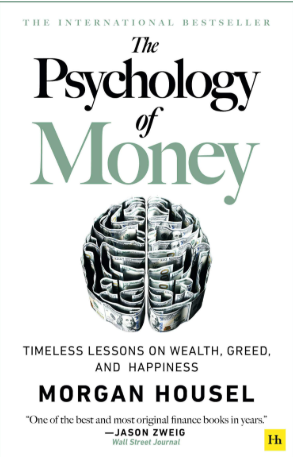
Book Name:
The Psychology of Money: Timeless Lessons on Wealth, Greed, and Happiness
Author Name:
Morgan Housel
Author Intro:
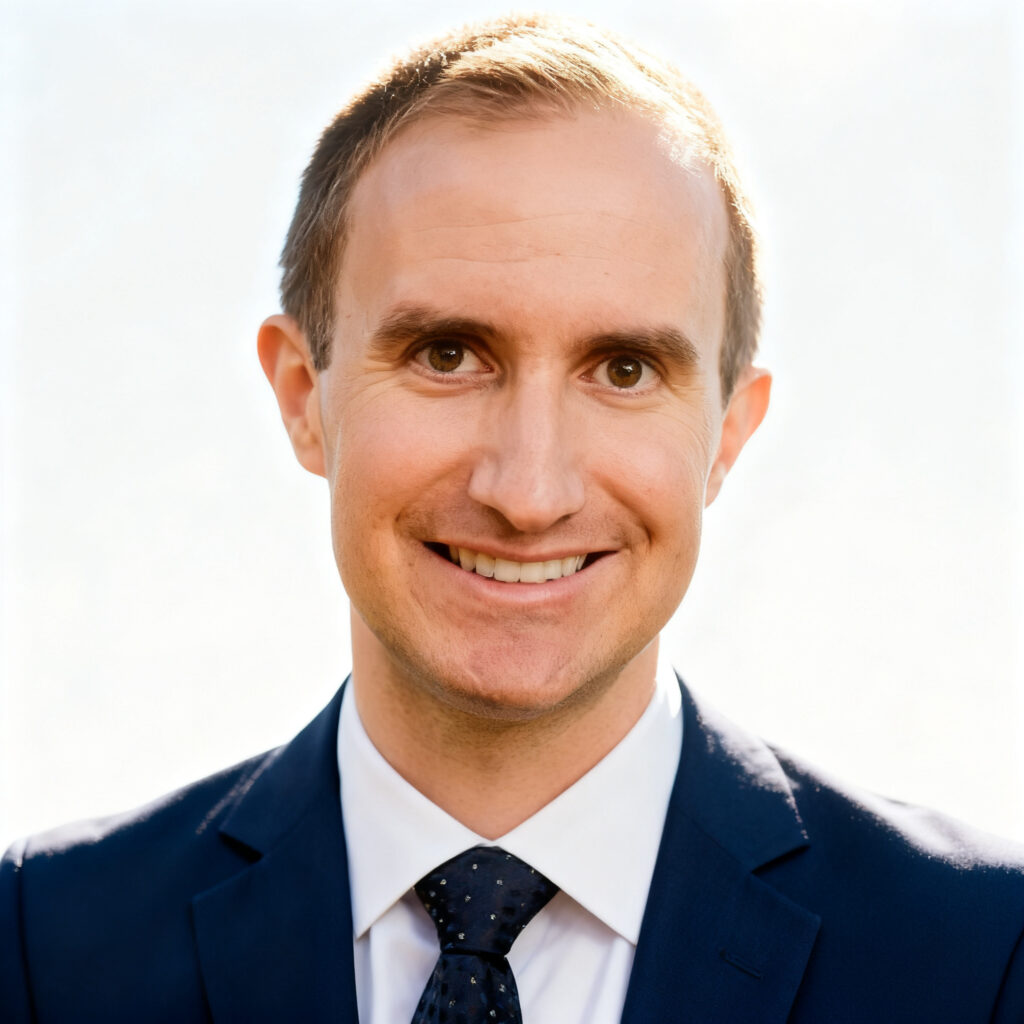
Morgan Housel is an investment partner with Collaborative Fund and one of the most well-read financial journalists in the world. Previously, he was a columnist at The Motley Fool and The Wall Street Journal. He has received many accolades for his writings and has even won the prestigious Best in Business Award from the Society of American Business Editors and Writers. He is famed for making difficult concepts relating to finance easier by storytelling, enabling people to understand them and implement them in their lives effortlessly. “The Psychology of Money,” released in 2020, sold more than four million copies globally.
What Is the Book About:
The Psychology of Money is not an academic work that provides numerical analysis of stocks or investments advice for readers. It is a book on the psychology behind making or not making money. In the book, the author explains the role of feelings, one’s past experiences, ego, and behaviors in earning, spending, saving, and investing money. According to Housel, financial success depends more on your behaviors rather than knowledge of finance. Therefore, the idea of this book is helping readers learn how to have the proper mentality that makes money work in their favor.
Who Should Read:

- Students and young adults starting out on their financial journey
- Entrepreneurs and business owners looking to create long-term wealth
- Investors looking to make better decisions
- Improve financial awareness
- Psychology geeks who study human behavior
Critical Review:
What Makes It Great:
One thing is for sure; Morgan Housel has got exceptional writing skills. Reading the book feels like listening to an old friend talking to you about something important. In no way is the book complicated; rather, it’s full of rich history and anecdotes. This book is probably the only finance book that makes you feel good about money. Each chapter is concise and brief, which makes reading easy.
Where It Falls Short:
This book is more theoretical than practical. If you are hoping to find detailed plans for investments, strategies, then you should not expect to get much from this book. There are also a few chapters that seem to be repetitive in nature.
Overall Verdict:
A must-read. It is not just a finance book — it is a book about human nature. Whether you are rich, poor, or somewhere in between, this book will give you a healthier, wiser relationship with money.
Is It Worthy to Archive?
Yes — Absolutely and Without Doubt.
This book must find a place in everyone’s library whether personal, academic, or professional. The wisdom in it doesn’t become outdated due to shifts in the markets or changes in economics. Psychological facts about human nature, which Housel discusses, are true for centuries and will continue being so. This book will be revisited again and again depending on how old you become, and you will find more insights every single time.
Brief Summary:

Chapter 1: No One’s Crazy
Your Personal Life Experiences Shape Every Financial Decision You Make
Everyone living on this planet had a unique experience of growing up in different economic times — earning different amounts of money, facing different economic trends, and developing different perspectives about money within their families. Each of these experiences influences one’s attitude towards risks, savings, and expenditure throughout life subconsciously. People who had difficult times when growing up may have a negative attitude toward spending money freely, while those who had prosperous years can spend a lot without hesitation. Neither one is irrational or mad; rather, he just acts according to his reality.
Chapter 2: Luck & Risk
Success and Failure Are Never Entirely in Your Own Hands
Luck and risk are inseparable, and their influence on our financial affairs goes much further than we care to acknowledge. Housel makes his point about how fortune influences our destiny by giving the example of Bill Gates, who was able to use a computer as a student when virtually nobody else could do that. For every Bill Gates who made something out of himself using his talents, there was an equal number of people whose potential went unused for lack of a chance. The chapter teaches us not to be too proud about our achievements and too harsh towards ourselves in case of failure.
Chapter 3: Never Enough
The Dangerous Trap of Always Wanting More Than You Already Have
The one thing that can be said to ruin personal finances more than anything else is the failure to understand what “enough” means. As stated by Housel, there have been numerous extremely rich individuals who ruined their lives, and even served prison time, all as a result of their insatiable appetite for acquiring more money than necessary. This is neither an issue of ambition nor an issue of working towards goals; rather, it is the issue of ambition being transformed into greed. In social settings, everyone always finds another individual who makes more money than them to compare themselves to.
Chapter 4: Confounding Compounding
Patience and Time Are More Powerful Than Talent or Intelligence
Compounding is one of the most important ways to amass wealth; however, it is also the least recognized method. Buffett has accumulated an immense fortune over the years, but what everyone forgets is the fact that most of his fortune has been accumulated after he turned 65 years old through his disciplined approach to investments. According to Housel, it is essential to realize that compounding does not rely on earning high rates of return but rather on time. Even small amounts of money compounded over a period of years yield fantastic results that cannot be achieved by any other means.
Chapter 5: Getting Wealthy vs. Staying Wealthy
Two Completely Different Skills That Require Two Completely Different Mindsets
Building wealth and keeping wealth are two very different things and sometimes, completely opposite traits may be needed to achieve each one. Making money requires confidence, taking risks, hopefulness, and aggressiveness in pursuing opportunities. In order to keep oneself wealthy, on the other hand, one needs humility, caution, resilience, and a fear of losing their hard earned fortune. Many who end up becoming millionaires end up losing everything because they continue to think like money makers even when they need to start thinking like people who wish to preserve their fortunes.
Chapter 6: Tails, You Win
How a Small Number of Extraordinary Events Drive Almost All Financial Results
“Tail events” are those few decisions or occurrences in finance, investment, and business that account for most of the outcomes achieved in the industry. Even with a large percentage of errors made when making these decisions, you can still emerge as a winner in the game provided you have massive returns and very minimal losses. As Housel explains, using venture capital companies, you may incur losses when you start a venture capital company because you have invested in hundreds of firms with an expectation that some of them will be successful and others will flop. However, there is a possibility of reaping massive profits from just a single firm.
Chapter 7: Freedom
Real Reason to Build Wealth Is Control Over Your Time, Not Accumulation of Things
The greatest benefit money can provide is not luxury or status — it is freedom. Specifically, the freedom to choose how you spend your time, who you spend it with, and what work you choose to do. Housel argues that this sense of control over your daily life is the single biggest contributor to happiness, yet most people sacrifice it in the pursuit of earning more money. People take jobs they hate, work hours that destroy their health, and delay their real dreams — all to earn money that does not actually make them happier. True financial success means building enough wealth to have options, not obligations.
Chapter 8: Man in the Car Paradox
Impressing Others With Money Almost Never Works the Way You Think It Will
Nobody gives a second thought to your existence as often as you believe they do. In other words, a great deal of money spent on status-related items is essentially waste since it fails to impress others as well as make you truly happy. It is only those expenditures that correlate with what you believe in that bring dividends.
Chapter 9: Wealth Is What You Don’t See
Real Wealth Is Invisible, It Is the Money You Chose Not to Spend
According to Housel, we have the tendency of assessing the wealth of others based on their tangible assets; however, everything tangible is always about consumption, not saving. Creating invisible wealth through earning more than one spends, and investing the surplus is always tedious and unsexy, but certainly works. People who seem the most boring in the crowd are the richest among us.
Chapter 10: Save Money
Saving Is the Most Powerful Financial Strategy Available to Everyone, Everywhere
Housel suggests that savings represents the difference between your ego and income, and that the lower your ego is, the greater will be your savings. Contrary to investment gains that depend on uncertain market conditions, savings lies completely within your reach. In addition to being the key to wealth, savings provides you with something that money cannot buy. Money in your account provides you with the ability to quit a job you hate or even take advantage of some unexpected opportunity. This ability to do things on your own terms can be acquired through savings.
Chapter 11: Reasonable > Rational
Financial Plan You Can Stick to Is Always Better Than a Perfect Plan You Cannot
If one is unable to stick to an “optimally” calculated investment strategy in times of financial crisis, fear, and doubt, the strategy is rendered ineffective. As explained by Housel, being human means one does not behave robotically; instead, people act emotionally, irrationally, and inconsistently. One may choose to pursue a sensible financial strategy that will last for 30 years instead of pursuing what might seem like an optimally calculated strategy but which one fails at after encountering the very first period of market turbulence. Sleeping at night because one has a sub-optimal yet more comfortable portfolio is better than worrying about one’s portfolio.
Chapter 12: Surprise!
History Is a Poor Guide to the Future and Uncertainty Is the Only Financial Certainty
Each era encounters unforeseen events such as wars, pandemics, technological advancements, and economic crashes that were never experienced before in the lifetime of another generation. As stated by Housel, understanding the history of finances provides one with valuable insights as well as dangerous complacency that may arise from thinking that tomorrow will be a copy of the past. The world evolves in ways that render previous assumptions and models irrelevant within days. Therefore, the best approach to finances should be a flexible and resilient model, not an optimal one for a predicted future.
Chapter 13: Room for Error
Building a Safety Margin Into Your Financial Plans Protects You From the Unexpected
Even if you think your financial plan is perfect, always make sure to have some space for potential mistakes. As Housel says, the worst thing one can do with finances is to operate with no buffer at all, borrowing the maximum amount of money, investing the last penny in hopes of earning money, and counting on everything working out just fine. Life is unpredictable: one loses his job, falls ill, faces market downturns, and changes his personal life completely. Financial margin is not about being scared of life. It’s about having sense and remaining realistic. The point is not to win every battle but to stay in the game until compounding kicks in.
Chapter 14: You’ll Change
Financial Goals You Set Today May Not Be the Ones You Want Tomorrow
Individuals grow and transform more than they anticipate through their lifetimes. The financial dreams that motivate one at 25 years old might be considered as unimportant by 45, while an individual’s retirement savings made when he or she is 40 years old might no longer fit one when he or she turns 60. Individuals should, according to Housel, avoid falling into what he terms as “the end of history illusion,” which is the false assumption that one’s values and preferences now are forever set. The consequences for individuals’ finances from avoiding the “end of history illusion” are enormous.
Chapter 15: Nothing’s Free
Understanding That Every Financial Reward Comes With a Price You Must Be Willing to Pay
Any financial gain in life always comes at a cost, which can be summarized into four things: volatility, uncertainty, risk, and patience. The stock market offers amazing gains in the long run; however, the cost is going through devastating crashes during its journey that make you think of quitting. For Housel, the volatility of the stock market should not be looked at as something to be avoided but rather as something to be paid for. Those people who attempt to dodge this payment by constantly entering and exiting the market end up paying much more than the original price.
Chapter 16: You & Me
Different Financial Goals Make the Same Investment Look Sensible and Crazy at the Same Time
Investors come with their own investment philosophies, time frames, tolerance to risks, and financial situations, and something which can prove to be an excellent move for one investor may not turn out to be very good for another. Housel cautions that taking financial advice from individuals who have no common financial ground at all with you can prove to be a very costly decision. For instance, a day trader will not need to operate by the same rules as a retirement investor; however, he needs to know the same information, listen to the same experts, and study the same market statistics.
Chapter 17: The Seduction of Pessimism
Bad News Always Sounds Smarter and More Believable Than Good News
Housel notes that negative predictions travel further, have more visibility, and are regarded as more believable than positive predictions, even though the statistics in the long run always end up favoring optimism. There have been wars, depressions, plagues, disasters, and calamities throughout history, but through centuries, humanity keeps progressing on an upward trajectory. Short-term pessimism is justified, but long-term pessimism has proven itself to be incorrect throughout history.
Chapter 18: When You’ll Believe Anything
Stories and Narratives Drive Financial Decisions More Than Facts and Data
Human beings are hard-wired storytellers. We tend to interpret the universe using stories rather than figures. Financially speaking, a convincing narrative about an economy, a stock, or a business could have a far greater impact than the figures themselves on the financial markets. According to Housel, it was a combination of bad mathematics and compelling narratives that made the 2008 financial crisis possible along with many other financial bubbles. People will try to prove whatever they believe in very passionately, seeking out confirming evidence and ignoring any contradicting information.
Chapter 19: All Together Now
Bringing Every Lesson Together Into a Unified, Practical Personal Finance Philosophy
This last chapter concludes by summarizing the 18 lessons previously taught by formulating them as a philosophy for the proper management of money. They include saving regularly, spending less than you earn, giving time to compound the money, avoiding any catastrophic failure, creating enough flexibility in the system, and having a personal definition of “enough”. Managing one’s money well is not about making one big move at some point in one’s life; instead, it’s about being able to make thousands of small, boring decisions throughout the years. In his conclusion, Housel leaves the reader with a strong statement: that one doesn’t have to be the richest one in the room but should enjoy living freely and safely.
Key Lessons From the Book:

Here are the most powerful takeaways every reader should remember:
- Behavior trumps intelligence. Your attitude is what will make you rich regardless of IQ and education.
- Know where your “enough” lies. The absence of a goal will only lead to an unhealthy pursuit of wealth that will never end.
- Time is your most valuable resource. Compounding favors discipline more than any other factor.
- Growth and preservation of wealth are two separate things. Learn how to stop growing and start preserving
- Saving provides choices, having cash flow means freedom. Freedom is what wealth is all about.
- Consistency is better than perfection. A good approach that you can stick to for many years is superior to perfectionism and an unworkable scheme
- True wealth lies in the unseen. The true wealth is the money you manage to save and invest while the rest is mere consumption.
- Control of your time with money. Do not spend your money to gain admiration from the audience that does not exist.
- Luck and risk come together. Be modest in case of success and empathic in case of failure since both come unexpectedly.
- Leave room for error. Have some safety margin in your financial matters since the unexpected will certainly happen sooner or later.
- Change is inevitable. Make your finances flexible enough to accommodate your future changing needs and priorities.
Final Thoughts:
This is one of the most important books written about personal finance in the 21st century. It is important not because it is complicated, but because it is so profoundly simple and honest.
It doesn’t guarantee you that you will get rich quickly and doesn’t teach you any magic secrets of investing. What it actually does is much more significant. This book tells you why your relationship with money is the way it is, why you make certain decisions, and how minor changes can result in much better results.
But if there is one finance book you must read in your lifetime, this is it. Not only will it change your bank balance but also your approach to money in general.