
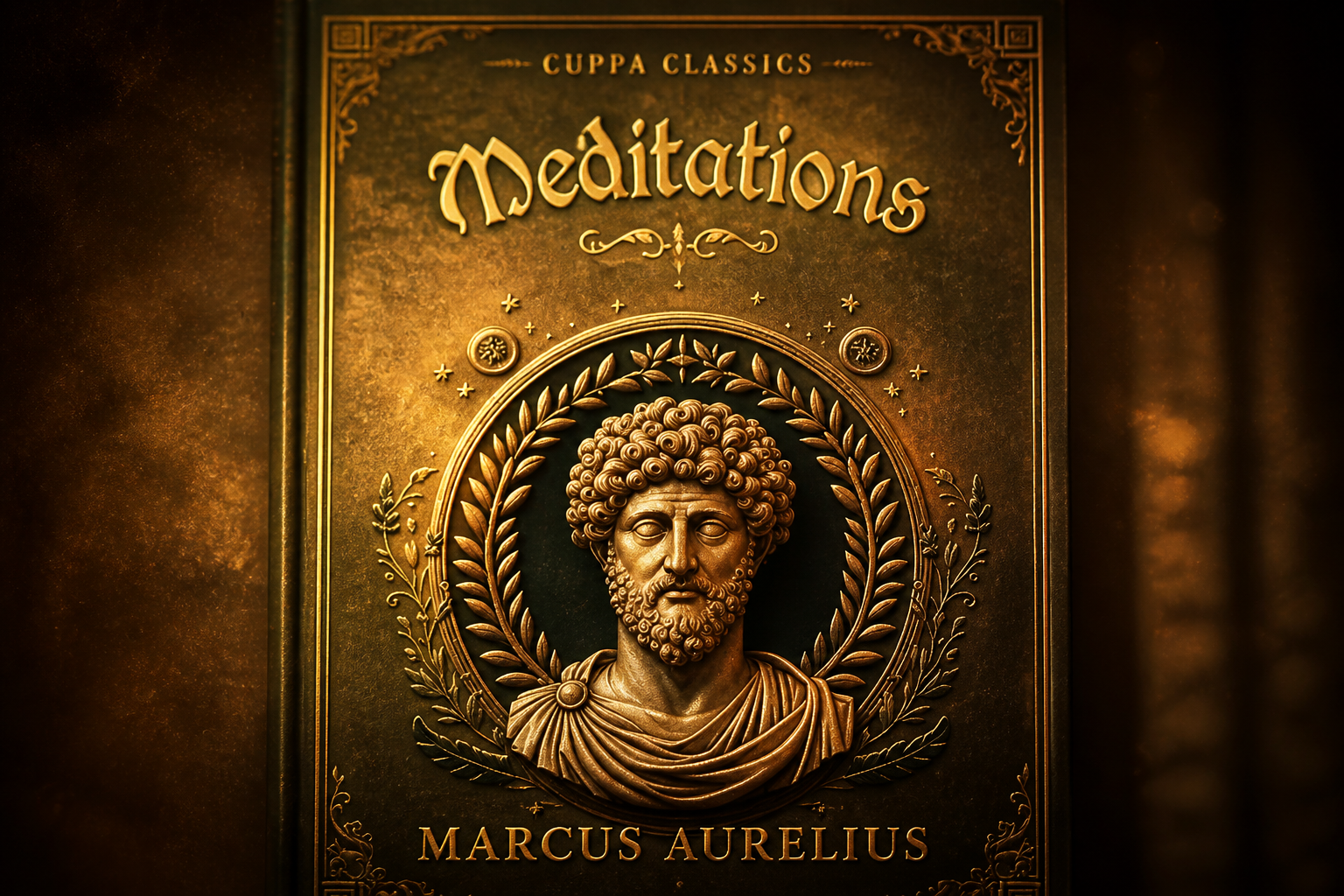
Book Name: Meditations
Dive into Meditations by Marcus Aurelius, a classic philosophical work that guides readers on reflection, mindfulness, and resilience through the lens of Stoic thought.
About the Author: Marcus Aurelius
Marcus Aurelius was a Roman emperor and leading voice of Stoicism. He taught the importance of a steady focus on what one can control; personal judgments and actions, supported by short daily journaling to build consistent self-discipline and mental toughness. Marcus recommended practices like negative visualization to prepare mentally for setbacks and to reduce fear of loss. The book’s brief, aphoristic entries are ideal for habit-driven growth, helping readers develop inner peace and calm under pressure and making clearer decisions in stressful times. By prioritizing simplicity, duty, and repeated practice, his teachings remain a concise, actionable roadmap for steady personal and professional growth.
What this book is about
Meditations is a personal journal written by Marcus Aurelius, Roman Emperor, and reflects how one can be a stoic person. It helps to learn how to focus on judgment and action because the former can always change. Meditation is done through repetition and practice of such disciplines as reflection/journaling, negative visualization, and other exercises to develop discipline, mental toughness, and tranquility. Such skills will help anyone who has a goal in mind, be it an entrepreneur or a creative leader.
Marcus Aurelius and Stoicism
Marcus Aurelius is a living example of Stoicism because he practiced its principles while ruling an empire, and recorded those practices in his private journal, Meditations, making abstract ideas intensely practical. Marcus repeatedly uses daily journaling as a tool to correct thoughts, reinforce values, and build self-discipline; his short, direct entries show how tiny mental adjustments compound into steady character. He emphasizes virtue ethics like wisdom, justice, courage, demonstrating that moral excellence, not fame or wealth, should guide decisions. As an emperor facing wars, plagues, and politics, Marcus’s Stoicism shows how to remain effective and humane under pressure, making Stoic teachings relevant for leaders and entrepreneurs today. His candid, humble tone, writing for himself rather than for accolades, makes Stoic practice accessible and relatable. Because Meditations is practical, concise, and repeatedly focused on actionable habits, it functions as a handbook for cultivating inner peace under pressure. Finally, Marcus’s enduring influence has kept Stoicism alive across centuries, proving its value as a real-world philosophy for managing stress, improving judgement, and living with purpose.
Quick Summary
Book 1:
Marcus opens with a long list of people who influenced him and the concrete lessons they taught—family, tutors, friends, and comrades. He expresses gratitude and shows how virtues like modesty, honesty, and self-control are learned by imitation and practice. The tone is personal and grounded: these are not abstract ideals but habits formed through relationships and examples. Marcus reminds himself that small, repeated impressions shape character more than grand theories. This chapter sets the foundation: character grows through exposure to role models and deliberate practice.
Book 2:
This book reads like a morning pep talk to face the day with discipline and purpose. Marcus urges himself to expect difficult people and events, and to meet them with patience rather than anger. He repeats the core Stoic advice: focus on perceptions and actions, not on outcomes beyond your control. There are practical notes about avoiding distractions, keeping to duty, and beginning work without delay. The writing encourages readers to treat each day as a training ground for calm, consistent action.
Book 3:
The emphasis here is on mental clarity and daily inner work. Marcus stresses the importance of controlling desires and impulses, using reason to guide behavior, and keeping the mind free from pointless opinions. He recommends short, regular self-examination—like quick journaling—to align intentions with action. The entries also remind us of mortality so that trivial worries lose their grip. Overall, Book 3 teaches that inner freedom and resilience come from disciplined thought and honest self-checks.
Book 4:
Here Marcus reflects on the world’s constant change and our place within it. He urges acceptance of flux and the wisdom of acting in harmony with nature and reason, not with ego or reputation. The book advises modesty and steady duty, and warns against being swayed by praise or fame. Marcus uses short aphorisms to reinforce that opinions and external goods are indifferent compared to virtue. These reminders are practical rules for sustaining calm under pressure.
Book 5:
Book 5 is a call to action: start your work, even when you feel unmotivated or doubtful. Marcus highlights how self-discipline beats mood and how small consistent actions build momentum. He encourages tackling duties promptly and using effort as a remedy for confusion and weakness. The entries show that rudimentary habits—showing up, doing the work—produce clarity and effectiveness. This book is especially valuable for creators and entrepreneurs who battle procrastination.
Book 6:
In this section Marcus contemplates unity, compassion, and the temporary nature of success and pain. He reminds himself that each person is part of a larger whole and that acting justly benefits the community. The writing calls for humility and the courage to accept fate while performing one’s duties. Marcus also reflects on how fame and suffering are fleeting, so focus on moral clarity. The overall message is ethical steadiness and humane leadership.
Book 7:
Book 7 brings deeper reflections on death, time, and justice. Marcus urges using time well and rejecting distractions that pull you from meaningful work. He stresses that inner virtue outweighs external rewards and that accepting mortality frees you to act with purpose. The entries emphasize fairness, measured speech, and persistence in right action. This book reinforces the Stoic habit of returning to essentials when stress or vanity intrudes.
Book 8:
Here Marcus addresses desire, fear, and the misjudgment of what truly benefits us. He promotes calm, simple decision-making and encourages choosing virtue over comfort. Negative visualization appears as a practice to reduce fear of loss and to make practical contingency plans. The entries teach that obstacles are exercises for character rather than punishments. Book 8 offers tools for clearer judgment under pressure.
Book 9:
Book 9 returns to perspective: life is short and part of an ordered whole. Marcus advises treating insults, failures, and distractions as feedback rather than threats to identity. He calls for steady work, compassion, and an acceptance that other people often act from ignorance or pain. The entries encourage emotional resilience—responding with reason instead of reactivity. This chapter is valuable for leaders who must keep team morale steady through setbacks.
Book 10:
Repetition strengthens the basics in this book: act with reason, practice duty, and remain present. Marcus warns against obsession over reputation or future approval and stresses consistent ethical behavior now. The entries are pragmatic reminders that small, right actions compound into an upright life. He also emphasizes the importance of internal calm for clear decision-making. Book 10 is a refresher on daily Stoic discipline.
Book 11:
book focuses on moral behavior in relationships and public life—fairness, clear judgment, and patience. Marcus reflects on how to treat others with understanding, recognizing their flaws often come from ignorance or pain. He gives practical advice on speech, action, and leadership during conflict and complexity. The tone is instructive for anyone who must manage people or reputations. Book 11 ties Stoic ethics directly to effective leadership.
Book 12:
The final book closes with sober reminders about mortality, simplicity, and steady improvement. Marcus repeats that life is short and that small, continuous practice leads to lasting change. He urges letting go of trivial concerns and centering attention on what truly matters—virtue, duty, and calm presence. These final entries wrap the collection into a practical handbook for living deliberately. The closing notes serve as continued prompts to practice Stoicism daily.
Key Lessons
- Focus on what you can control: Your judgments and actions shape outcomes more than external events.
- Practice daily reflection/journaling: Short, consistent notes cultivate insight and steady growth.
- Use negative visualization: Mentally rehearse setbacks to reduce fear and plan responses.
- Build self-discipline and resilience/mental toughness: Small habits stacked over time lead to lasting strength.
- Lead with virtue ethics: Integrity, fairness, and calm under pressure create sustainable influence.
Important Takeaways
- Stoicism is a practical framework for reducing stress and improving decision-making.
- Meditations provides short, repeatable practices for entrepreneurs, creators, and leaders.
- Core habits: daily reflection/journaling, focusing on what you can control, and practicing negative visualization.
- These practices build inner peace, resilience, and calm under pressure.
- Virtue ethics and steady discipline produce lasting trust and effective leadership.
Short Review
Meditations is a compact, hands-on manual for living well under stress. Its short entries are ideal for quick mental resets and habit-building rather than academic study. For anyone building businesses, creating content, or leading teams, the book offers daily tools to stay focused, disciplined, and ethically steady.
Who Should Read
- Founders, entrepreneurs, and creators seeking resilience and focus.
- Leaders wanting to practice virtue ethics and calm under pressure.
- Anyone facing burnout, distraction, or fast change.
- Readers who prefer short, actionable reflections and habit-driven growth.
Final Message
Start a 3–5 minute daily reflection/journaling habit: write one thing you control and one action you’ll take.
- Practice negative visualization weekly: imagine a setback and list practical responses to reduce fear.
- Commit to one small discipline for 30 days (start time, work routine) to build self-discipline and resilience.
- Make decisions through the lens of virtue ethics—ask: “Is this honest, fair, and sustainable?” If yes, act calmly.